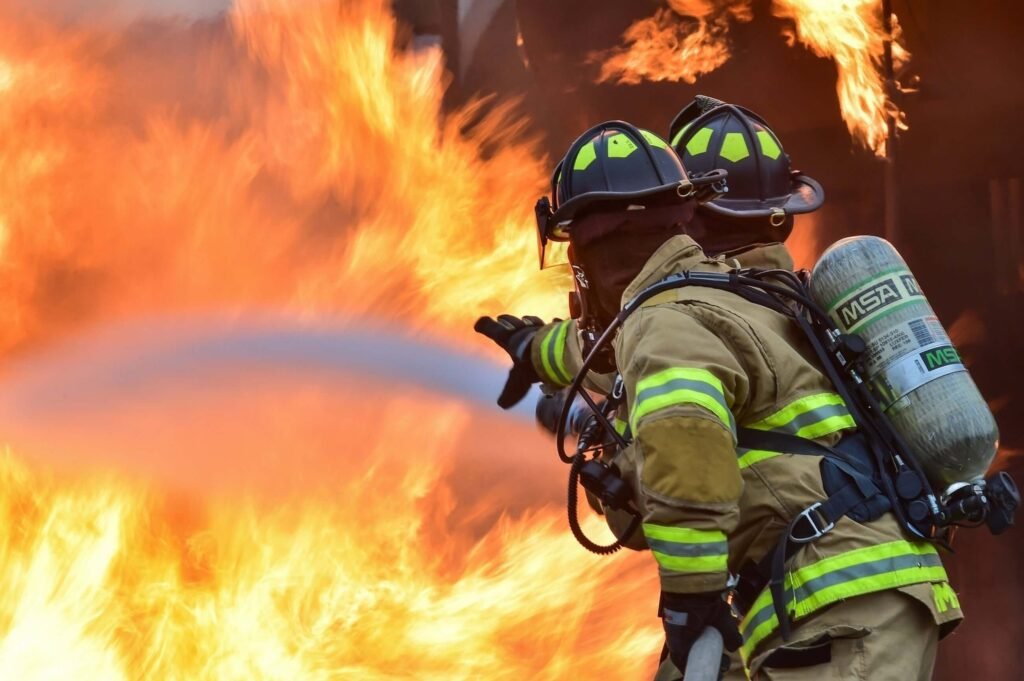
A house fire is one of the most traumatic events a Los Angeles homeowner can experience. In the immediate aftermath — the smoke still settling, the walls charred, possessions lost — it’s hard to know where to begin. That moment of paralysis costs real money and, more importantly, it costs time your property can’t afford.
This guide is written by certified restoration professionals with over a decade of experience handling fire damage restoration across Los Angeles County. Whether you’re dealing with a kitchen fire that scorched your cabinets or a structure fire that gutted a full floor, the information here will tell you exactly what to do, what to expect, and how to make sure your insurance pays every dollar you’re owed.
| ⚠ IMPORTANT SAFETY NOTICE Do not re-enter a fire-damaged property until the Los Angeles Fire Department or a certified structural engineer has declared it safe. Smoke residue is toxic, and structural damage may not be visible to the naked eye. |
1. The First 24 Hours After a Fire in Los Angeles
The actions you take in the first 24 hours after a fire are the single biggest factor in determining how much your property recovers — and how much your insurance claim yields. Here’s what certified restoration professionals recommend, in order:
| 01 | Call 911 & Secure the Scene Even if the fire appears out, call 911. LAFD will inspect for smoldering hotspots and issue a clearance before anyone re-enters. |
| 02 | Contact Your Insurance Company Report the loss immediately. Request emergency ALE (Additional Living Expense) coverage so you can secure temporary housing tonight. |
| 03 | Document Every Single Thing Before any cleanup starts, photograph and video every room. This documentation is your strongest protection during the claims process. |
| 04 | Call a Restoration Company A reputable fire damage restoration company in Los Angeles can deploy emergency board-up and tarping services within hours to prevent secondary weather and vandalism damage. |
One critical detail most homeowners miss: secondary damage begins within hours. Smoke and soot are acidic. Surfaces that weren’t touched by flames — appliances, counters, wood trim — begin to discolor and corrode as soon as the fire is extinguished. Water from firefighting efforts accelerates mold growth, often within 24 to 48 hours. Speed is not a luxury; it’s a financial necessity.
2. What Does Fire Damage Restoration Actually Cover?
Many homeowners are surprised to learn that professional fire damage restoration is far more comprehensive than simply cleaning up soot. A certified restoration company in Los Angeles handles every phase of recovery, from emergency stabilization to full reconstruction.
Emergency Services (Hours 1–48)
- Board-up and roof tarping to secure the structure
- Emergency water extraction from firefighting efforts
- Industrial dehumidification to prevent mold
- Content pack-out and inventory for insurance documentation
Smoke & Soot Removal (Days 2–7)
- HEPA air scrubbing throughout the entire structure
- Chemical dry sponge cleaning of walls, ceilings, and surfaces
- Thermal fogging to neutralize embedded smoke odors in porous materials
- Ozone treatment for severe smoke saturation
- Duct cleaning to prevent redistributing soot through HVAC systems
Structural Repairs & Rebuild
- Removal and replacement of fire-damaged drywall, insulation, and framing
- Electrical rewiring in affected areas (required for LA building code compliance)
- Roof repair or replacement
- Cabinet, flooring, and finish restoration or replacement
- Final inspections and city permits
| “The difference between a property that fully recovers and one that doesn’t usually comes down to how quickly restoration begins — not how bad the fire was.” |
3. The Fire Damage Restoration Process: A Realistic Timeline
Every fire loss is unique, but the restoration process follows a predictable sequence. Here’s what a typical residential fire damage project in Los Angeles looks like from start to finish:
Day 1 – 2
● Emergency Response & Assessment
Certified technicians arrive on-site, conduct a full structural and air quality assessment, board up openings, and begin water extraction. A detailed scope of loss is documented for your insurance adjuster.
Days 3 – 10
● Smoke, Soot & Odor Remediation
Industrial-grade HEPA filtration, chemical cleaning, thermal fogging, and ozone treatments run concurrently. All surfaces — including inside wall cavities if required — are treated to eliminate smoke odor at the source.
Week 2 – 3
● Demolition of Unsalvageable Materials
Charred framing, compromised insulation, and smoke-saturated drywall are carefully removed. Every item is documented and photographed before disposal for your insurance claim.
Week 3 – 6+
● Reconstruction & Restoration
Structural rebuilding begins, including framing, electrical, drywall, insulation, roofing, flooring, and finish work — all performed to current California building codes.
Final Week
● Final Inspection & Clearance
Air quality testing verifies no residual smoke or mold. City inspections are completed. Your home is returned to pre-loss condition — or better.
4. How Much Does Fire Damage Restoration Cost in Los Angeles?
Costs vary significantly based on fire severity, square footage, and the extent of structural damage. Los Angeles restoration costs tend to run higher than national averages due to local labor rates, permitting requirements, and building code standards.
| Damage Level | Description | Estimated Cost (LA) |
| Minor (Class 1) | Kitchen fire, limited smoke, minimal structural impact | $3,000 – $15,000 |
| Moderate (Class 2) | One or two rooms heavily damaged, significant smoke throughout | $15,000 – $50,000 |
| Major (Class 3) | Full floor involved, heavy structural damage | $50,000 – $150,000+ |
| Total Loss (Class 4) | Complete structural failure, full rebuild required | $150,000 – $500,000+ |
Important: These are estimates. Your actual costs depend on your property’s size, the materials used in original construction, and LA County permit requirements. A professional on-site assessment is the only way to get an accurate number.
5. How to Maximize Your Fire Damage Insurance Claim in California
1. Don’t Accept the First Estimate
Insurance adjusters work for the insurance company, not for you. Their initial estimates frequently undervalue the true scope of damage — particularly hidden smoke damage inside walls, ductwork, and subfloor cavities.
2. Document Everything Before Cleanup Begins
Use your phone to photograph every damaged room, every item, every surface. Make a written inventory of all personal property affected. Your insurance company is required to replace belongings at actual replacement cost (ACV or RCV depending on your policy).
3. Understand Your ALE Benefits
If your home is uninhabitable, your policy almost certainly includes Additional Living Expense (ALE) coverage that pays for hotel stays, restaurant meals, and storage while your home is being restored. Many LA homeowners don’t claim what they’re entitled to.
4. Work With a Restoration Company That Handles Insurance Directly
At Uplift Restoration, we communicate directly with your insurance adjuster throughout the process — documenting the full scope of damage, providing certified estimates, and advocating for complete restoration coverage.
6. Smoke Damage: Los Angeles Wildfires vs. Structure Fires
Los Angeles homeowners face a unique dual threat: smoke damage from interior structure fires and from regional wildfires that can blanket entire neighborhoods in fine particulate matter without a single flame touching the home.
Wildfire smoke contains particulates, heavy metals, and volatile organic compounds (VOCs) from burning vegetation, vehicles, and building materials across entire communities. Standard cleaning is not sufficient — air quality testing and HEPA remediation are required even in homes that appear visually unaffected.
| DID YOU KNOW? If your property was in the vicinity of a recent LA-area wildfire, a professional smoke damage assessment is recommended even if you see no visible damage. What you can’t smell or see may still be compromising your indoor air quality. |
7. How to Choose the Right Fire Damage Restoration Company in Los Angeles
Not all restoration companies are created equal. In the chaos following a fire, predatory contractors may arrive at your door before legitimate professionals do. Here’s how to evaluate any company before signing anything:
- IICRC Certified: IICRC Certification
- Every technician should hold current IICRC Fire & Smoke (FSR) certification.
- Licensed & Insured: Licensed & Insured in California via the CSLB (Contractors State License Board).
- 24/7 Response: 24/7 Emergency Response — fire damage does not wait for business hours.
- Insurance Billing: Direct Insurance Billing — no large upfront payments from homeowners.
- Written Scope: Written Scope of Work with every item documented before work begins.
- Local Experience: Local Los Angeles Experience — LA has specific permits, codes, and seismic retrofit standards.
8. Frequently Asked Questions
| Q: How long does fire damage restoration take in Los Angeles? Most residential projects take between 2 to 8 weeks depending on severity. Minor smoke and soot damage may be resolved in under a week, while large structural fires can require 2–4 months of complete rebuilding. |
| Q: Does homeowner’s insurance cover fire damage restoration in California? Yes. In most cases, standard homeowner’s insurance covers fire damage restoration, including smoke cleanup, structural repairs, and temporary housing. A certified restoration company can work directly with your insurance adjuster. |
| Q: Is it safe to stay in my home after a fire in Los Angeles? No. Even after a small fire, your home may contain toxic smoke residue, compromised structural elements, and elevated carbon monoxide. Do not re-enter until a certified restoration professional or local fire marshal declares it safe. |
| Q: Can smoke-damaged belongings be restored? Many items — furniture, clothing, electronics, and documents — can be restored with professional content cleaning and ozone treatment. Our team inventories, packs out, and restores salvageable belongings off-site while your home is repaired. |
| Q: How soon should I call a restoration company after a fire? Immediately — within hours if possible. Secondary damage from soot acidity and firefighting water begins within 24–48 hours. The sooner restoration begins, the more of your property can be saved and the lower your total cost. |